Unnatural Instinct
Play Unnatural Instinct
Unnatural Instinct Screenshots


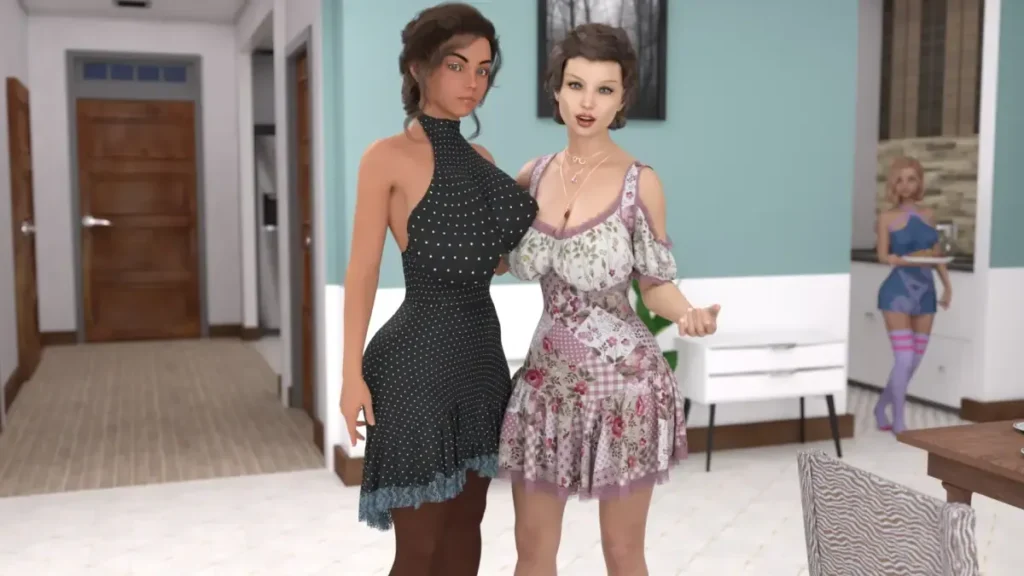

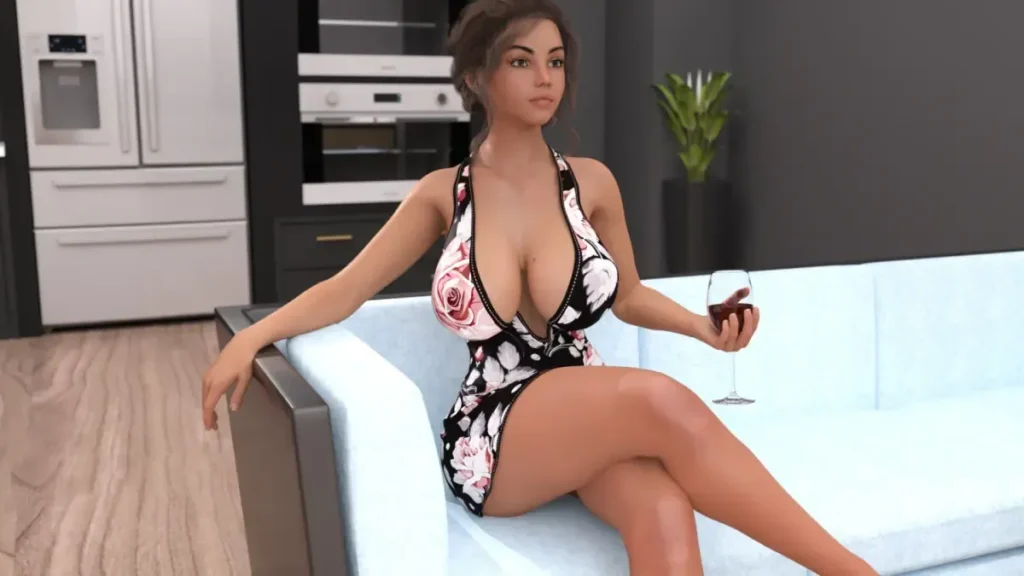
Unnatural Instinct review
Exploring power dynamics, consent, and identity in a genre-defining experience
Unnatural Instinct stands as a bold entry in the interactive fiction landscape, distinguished by its unconventional mechanics and thought-provoking storytelling. This game transcends typical narrative experiences by making players active participants in exploring complex psychological themes. Rather than passively observing a story unfold, you become entangled in a ritual that challenges your understanding of agency, consent, and selfhood. The game’s setting—a mysterious manor that shifts and changes—serves as more than mere backdrop; it becomes a character reflecting your psychological state. As you progress through intricate puzzles designed to gather ritual components, you’re forced to confront uncomfortable questions about your own motivations and the nature of your choices.
The Narrative Architecture: Story, Setting, and Ritual
Remember that feeling? You’re exploring a virtual space, a mansion maybe, picking up ornate keys and dusty journals, solving a logic puzzle to open a door, and the story just… happens around you. The environment is a backdrop, the puzzles are locks, and the narrative is a reward you get for being clever. I’ve played hundreds of games like that. But then I played Unnatural Instinct, and it made me realize I’d been thinking about interactive fiction storytelling all wrong. 🤯
This game doesn’t just tell you a story; it makes you build one, piece by unsettling piece, through deliberate action. Your goal isn’t to escape or discover a secret. It’s to perform a ritual. And every decision, every solved puzzle, every dark corner of the manor you brave is another step in a ceremony where you are the primary participant. This chapter dives into the brilliant, unsettling architecture that makes this possible. Let’s pull back the velvet curtain and see how the Unnatural Instinct narrative structure completely redefines the relationship between player, story, and space.
Understanding the Core Narrative Framework
At its heart, Unnatural Instinct is built on a simple, terrifying premise: you have willingly entered a forgotten manor to conduct an ancient ritual to change something fundamental about yourself or your reality. This isn’t a plot that unfolds to you; it’s a process you enact. The entire narrative structure is a funnel, guiding you from initial curiosity to committed, irreversible action.
The genius here is in the consent loop. The game constantly asks, through its very design, “Do you want to continue? Are you sure?” But it asks this not with dialog boxes, but with atmosphere, with the increasing unease of the setting, and with the nature of the components you gather. You start by finding relatively benign items—a specific type of wax, a silver bowl. But the instructions, the half-written notes you discover, hint at their eventual use. The psychological game design works by making you complicit. You are not solving puzzles to progress a story; you are gathering ritual ingredients to progress your own story.
This transforms the player’s motivation. In most games, we’re motivated by curiosity (“What’s behind that door?”) or goal-seeking (“I need the star gem!”). In Unnatural Instinct, the primary motivation becomes commitment. You’ve started this, so you must see it through. The narrative framework is a one-way mirror: you can see your reflection becoming more determined, more involved, and the game reflects that back at you by changing the world itself. Each “chapter” of the story is demarcated not by cutscenes, but by the completion of a major ritual step. The story is the ritual.
To visualize how these parts work in concert to create a profound psychological effect, let’s break it down:
| Game Element | Traditional Implementation | Unnatural Instinct’s Implementation | Psychological Impact |
|---|---|---|---|
| Setting | A static backdrop for events. | An active, reactive entity that shifts with player progress and mental state. | Creates paranoia and a sense of being watched/judged by the environment itself. |
| Puzzles | Logic gates blocking content; rewards are keys or tools. | Ritual components; solving is an act of willing participation in the unsettling. | Makes the player an active architect of their own discomfort, blurring the line between victory and transgression. |
| Narrative Choices | Branching dialog leading to different endings. | Choices in how you approach the ritual, what you focus on, deepening your personal “why.” | Fosters deep introspection. The “ending” is less about outcome and more about understanding your own motivations for getting there. |
The Manor as a Living, Breathing Character
Now, let’s talk about the true co-star of this experience: the manor. If you want a masterclass in atmospheric game setting, look no further. How does Unnatural Instinct use setting? It doesn’t use it as a container; it animates it. From the moment you step inside, the house isn’t just a location—it’s a respondent. 🏚️✨
Early on, the manor feels old, silent, and watchful. Portraits seem to follow you, not with a cheap jump-scare gaze, but with a slow, creeping certainty that they’ve just moved. The lighting doesn’t just set a mood; it communicates. A room you visited earlier, once bathed in weak afternoon light, might later be plunged into deep shadow, with only a single shaft of moonlight illuminating the ritual circle you’ve been slowly assembling on the floor. The environment isn’t reacting to a script; it’s reacting to you, to your progress, to your growing investment in the ritual.
I remember one pivotal moment. I had just placed a particularly arcane item—a bone whistle carved with impossible patterns—onto its designated plinth. The game didn’t play a fanfare. Instead, the entire west wing of the manor, which had been locked and silent, audibly sighed. A distant door creaked open down a hall I’d passed a dozen times. The temperature in the room I was in dropped noticeably (the game tells you this via text, a brilliant use of descriptive interactive fiction storytelling). The house was breathing. It was acknowledging my action, and offering me the next step. It felt less like unlocking a level and more like being deemed worthy by a living entity.
This reactive quality makes the setting the primary driver of psychological tension. The puzzles aren’t separate from the manor; they are of the manor. Finding a hidden drawer isn’t about pixel-hunting; it’s about understanding the house’s logic, its history, its secrets. You learn to “listen” to the environment. A faint, rhythmic dripping might lead you to a leak in the conservatory, which has warped a floorboard, revealing a hidden key not to a treasure chest, but to a locket containing a faded portrait—a vital emotional component for the ritual. The world and the goal are inseparable.
Puzzle Design and Ritual Progression
This brings us to the engine of the entire experience: the puzzle progression in games has rarely felt so purposeful, so heavy. In Unnatural Instinct, there are no filler puzzles. There is no “find three gems to open the door” trope. Every challenge you face is directly tied to the preparation of the ritual. This is the core of its ritual-based gameplay mechanics.
Think of it this way: instead of a checklist of tasks, you have a recipe for transformation. Each puzzle solved provides an ingredient, a step, or a condition. A complex astrological alignment puzzle done in the observatory doesn’t give you a key; it confirms the precise celestial moment a certain potion must be imbibed. A logic puzzle involving family portraits in the gallery doesn’t open a secret passage; it reveals the true name of a spirit you must invoke, which in turn changes the properties of a mirror you found earlier.
The progression is linear in goal but deeply personal in execution. The game presents you with the ritual’s needs, and the manor presents you with the clues to fulfill them. The “aha!” moment of solving a puzzle is immediately followed by the sobering “oh…” moment of understanding what you’ve just unlocked or prepared. You are literally constructing the narrative’s climax with your own two hands. 🧩➡️🕯️
This design brilliantly interlocks story and mechanics. The story cannot advance unless you engage with the mechanics (the puzzles), and the mechanics have no meaning outside the context of the story (the ritual). It forces the player to sit with the consequences of their cleverness. You feel smart for solving a difficult cipher, only to realize the text you’ve deciphered is a heartbreaking farewell letter you must now burn as an offering. The psychological game design weaponizes your own desire to solve the game against you, turning achievement into unease.
Furthermore, the ritual framework provides a natural and compelling pace. Each major component you gather creates a clear milestone. You move from the “Gathering of Elements” (earth, air, fire, water from within the manor) to the “Invocation of Presence” (using those elements to call forth something), to the final “Act of Will.” This structure provides a satisfying arc for the player, a sense of building towards something immense, which is crucial for maintaining engagement over a longer, atmospheric experience. You’re not just waiting for the story to get good; you are literally making it happen.
In the end, Unnatural Instinct presents a narrative architecture where every beam and brick supports a central theme: agency and its price. The manor is a psychological mirror, the puzzles are acts of commitment, and the ritual is the story you choose to tell about yourself. It’s a powerful reminder that in truly great interactive fiction storytelling, the most important journey isn’t through the haunted house, but into the reasons why you decided to walk through its door in the first place.
Unnatural Instinct represents a significant achievement in interactive fiction by refusing to separate story from mechanics. The game’s exploration of power dynamics, consent, and identity creates an experience that challenges players to examine their own agency and motivations. By making the manor itself a character and using puzzle progression as ritual advancement, the game ensures that every action carries psychological weight. What makes Unnatural Instinct particularly effective is its understanding that players aren’t passive observers—they’re active participants whose continued engagement becomes a form of consent. The blurring of boundaries between victim and participant, between imposed goals and personal desires, creates a deeply unsettling experience that lingers long after completion. For those interested in narrative-driven games that prioritize psychological depth and thematic coherence, Unnatural Instinct offers a masterclass in how interactive fiction can explore complex human experiences through gameplay itself.